

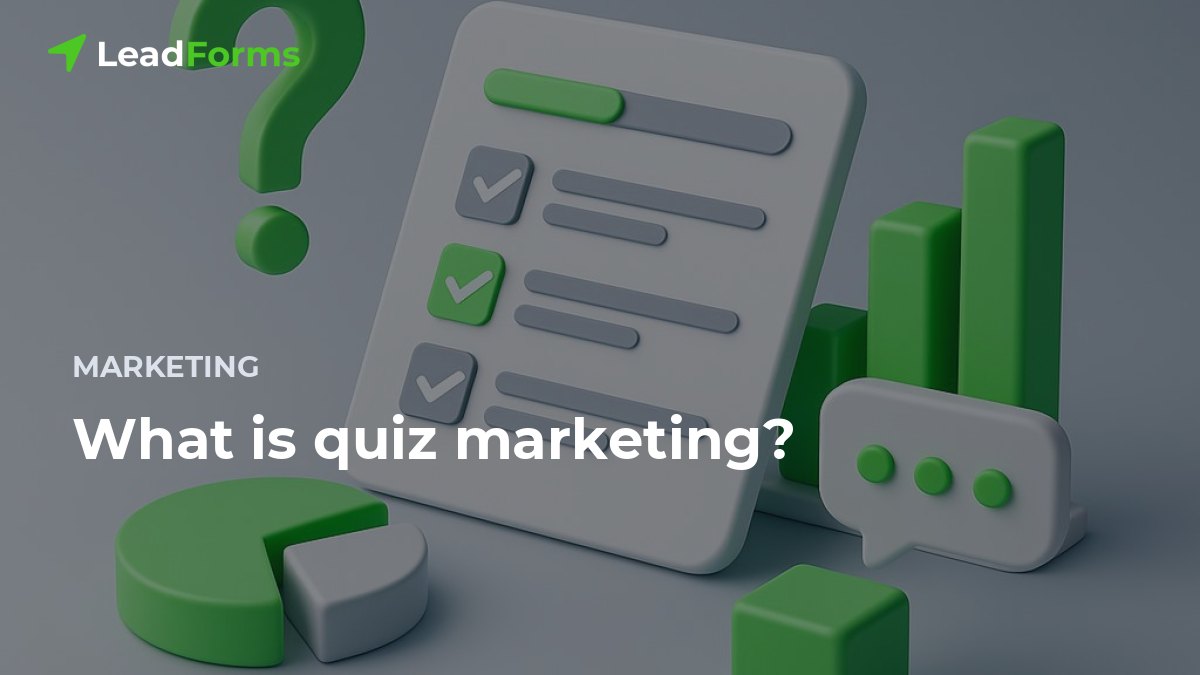
Quiz marketing is a way to attract and convert visitors with step-by-step surveys that help people figure out what they need faster and give the business a higher-quality lead.
Put simply: instead of a regular form with "Name" and "Phone" fields, the visitor goes through a short flow of a few questions, gets a more personal path to a solution, and only then leaves their contact details. This format keeps people engaged, helps you understand their needs, and improves lead quality.
That is why quiz marketing is used in niches where customers can't decide right away: when choosing a service, a product, a way of working, a budget, a timeline, or one option among several.
What a quiz is
A quiz is a step-by-step form or mini survey that walks the visitor through a pre-planned flow. At each step, the person answers one simple question, and at the end they get a result, an offer, a set of options, an estimate, a consultation, or another next step.
Unlike a regular form, a quiz works more gently. It doesn't ask people to decide and hand over their details right away. First, it gets them involved in the process.
A quiz usually has several parts:
- a clear headline that promises a result;
- short questions with simple answer options;
- a logical, uncluttered flow;
- a final step with the contact form;
- clear value for the visitor.
How quiz marketing works
The point of quiz marketing isn't to entertain visitors with questions. It's to lead them along a more comfortable path to a lead form.
It usually works like this:
- The visitor lands on your website, a landing page, or a standalone page.
- They see an invitation to take a short quiz.
- They answer a few questions about what they need.
- They get a personalized path or a promised result.
- They leave their details to receive the options, consultation, estimate, or offer.
This helps the business in two ways. First, the quiz lowers resistance at the first step. Second, it collects more information about the customer before the call or chat.
Why a business needs quiz marketing
Quiz marketing solves several problems at once that a regular form handles poorly.
It engages visitors
It's easier for people to start by answering a simple question than to submit a request out of the blue. A quiz lowers the barrier to entry and makes the first step lighter.
It improves lead quality
With a quiz, you can collect key data up front: budget, timeline, type of service, reason for reaching out, request format, and other details. As a result, your sales rep doesn't get an empty form but a much clearer lead.
It makes choosing easier
If your business has several product lines, plans, services, or sales scenarios, a quiz helps visitors see faster what fits them.
It filters out some unqualified contacts
A quiz helps you segment traffic and better understand who is submitting leads. This matters most with paid traffic, where quality counts as much as quantity.
It helps you build a funnel
You can connect the quiz to your CRM, analytics, email marketing, and other tools so leads are handled systematically, not by hand.
How quiz marketing differs from a regular form
A regular form almost always collects the bare minimum: name, phone, email, comment. That works when the visitor is already ready to reach out and knows exactly what they need.
Quiz marketing fits a different situation: when you need to engage the customer a bit more, help them choose, and collect more context about their request.
The main differences between a quiz and a regular form:
- a quiz guides the visitor step by step instead of showing all fields at once;
- a quiz helps clarify the need, not just collect a contact;
- a quiz gives you more ways to segment leads;
- a quiz usually works better for complex products and services.
That said, a quiz doesn't always have to replace a regular form. In many cases they work best together: the quiz for people who need help choosing, the regular form for people ready to contact you right away.
Who quiz marketing is for
Quiz marketing works especially well where the customer has to pick one option among several or describe their need before getting in touch.
Quizzes are most common in these industries:
- real estate;
- remodeling and construction;
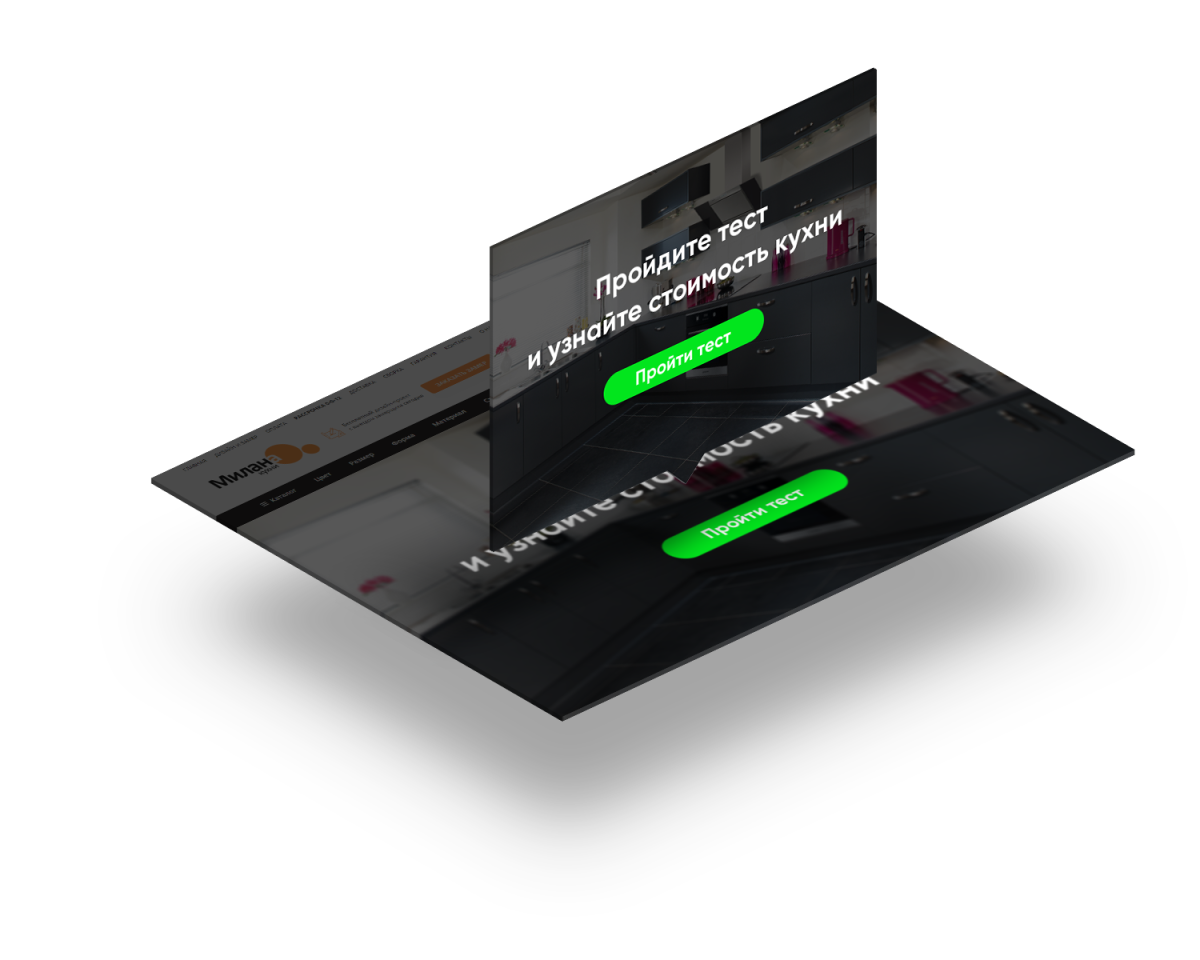
- furniture, kitchens, windows;
- healthcare and dentistry;
- education and online courses;
- travel;
- auto services;
- legal and other professional services;
- B2B services with complex requests.
In all of these niches, a "Request a call" button is rarely enough. Customers need help putting their need into words and figuring out what fits them.
When quiz marketing works best
Quiz marketing delivers the best results when several conditions are met.
- The visitor can choose between several options.
- The price depends on the parameters.
- The business needs data before the first contact.
- A regular form gives too little information.
- You need not only to collect the contact but also to qualify the lead.
If the customer just needs to request a quick callback, book a specific service, or buy a simple product at a fixed price, a quiz may not be the best fit. In those cases, a regular form is usually faster.
What quiz marketing does for you
Lead capture
The most obvious job: getting contacts from your website not through a standard form but through a more engaging format.
Lead qualification
A quiz shows what need the customer came with, how qualified they are, and which details matter for the sale.
Higher conversion
With a good flow, a quiz increases the share of visitors who end up submitting their details.
Audience segmentation
You can use the answers to personalize follow-up, route leads, and set up your funnel.
Preparing your sales rep
Your sales rep gets the context of the request in advance and can have a much more focused conversation.
What a good quiz looks like
For quiz marketing to deliver, having a quiz isn't enough. What matters is the quality of the flow.
A good quiz usually:
- starts with a simple, clear question;
- is written in the customer's language, not in your company's internal jargon;
- includes only the steps that really matter;
- leads the visitor to the end logically;
- explains what the person will get after submitting their details;
- doesn't promise what the business can't deliver.
If the quiz is overloaded, long, confusing, or asks unclear questions, it starts getting in the way and loses conversions.
Quiz marketing mistakes
Building a quiz because it's trendy
If the flow doesn't solve the visitor's problem or help the sale, the quiz becomes a pretty but useless wrapper.
Too many questions
Every extra step lowers the chance that the person makes it to the end.
Complicated wording
Visitors shouldn't have to understand industry jargon. Questions should be simple and clear.
A weak final offer
If people don't understand why they should leave their details, motivation drops sharply.
No connection to the rest of the funnel
Quiz marketing is strongest when it's connected to your CRM, analytics, email marketing, and lead handling process.
Can quiz marketing work for almost any business?
Not quite. Quiz marketing is a flexible tool, but it doesn't fit every scenario.
It's especially useful where:
- the choice is complex;
- you need to clarify the details of the request;
- lead quality matters;
- you need a gentler path to the contact form.
If the product is simple, clear, and needs no explanation, a quiz may be overkill. In that case, use a short form, a contact button, or another quick way to submit a request.
How to use quiz marketing on your website
A quiz usually goes on your website, a landing page, or a separate page, or runs directly from ad traffic. Depending on the flow, the quiz can lead to a consultation, a set of options, an estimate, a lead form, a bonus, or another target action.
To get the most out of quiz marketing:
- write a clear headline and offer;
- don't overload the quiz with steps;
- ask questions in a logical order;
- explain the value of the final action;
- analyze the results and improve the flow.
Conclusion
Quiz marketing isn't just a trendy survey format. It's a tool that helps you engage visitors, understand their needs better, and get higher-quality leads. It's especially useful for businesses with a complex choice, several sales scenarios, and a need to collect more data before the first contact.
A good quiz makes the path to the lead form simpler and clearer. A bad quiz only makes that path harder. So results don't depend on the format itself but on how well the flow is built, how the questions are worded, and how well thought out the final step is.
If you use a quiz with purpose, not just to have a pretty widget on your site, quiz marketing can become a strong part of your sales funnel and lead generation.
